About This Paper
What this is
Sporting Chronicles is a weekly record of American sport, published a hundred years and more after the fact. Each issue covers the week before its date, as a sporting weekly of the time would have: baseball, the ring, the turf, football, golf, tennis and whatever else was being contested for a prize.
Each issue knows only what a reader could have known when it went to press, at about eleven on Sunday night. It does not hint at what came later. When a story was still open, the paper leaves it open.
What is real and what is made
The events, the people, the scores and the figures are real. They come from the newspapers of the week, the racing papers and the official records, and from modern histories where those are the better guide to what was printed at the time.
Where the accounts of the day disagree, as they often did about crowds, prices and odds, the paper prints both. It does not quote anyone directly unless the wording has been checked against an image of the printed page. Otherwise it reports what was said.
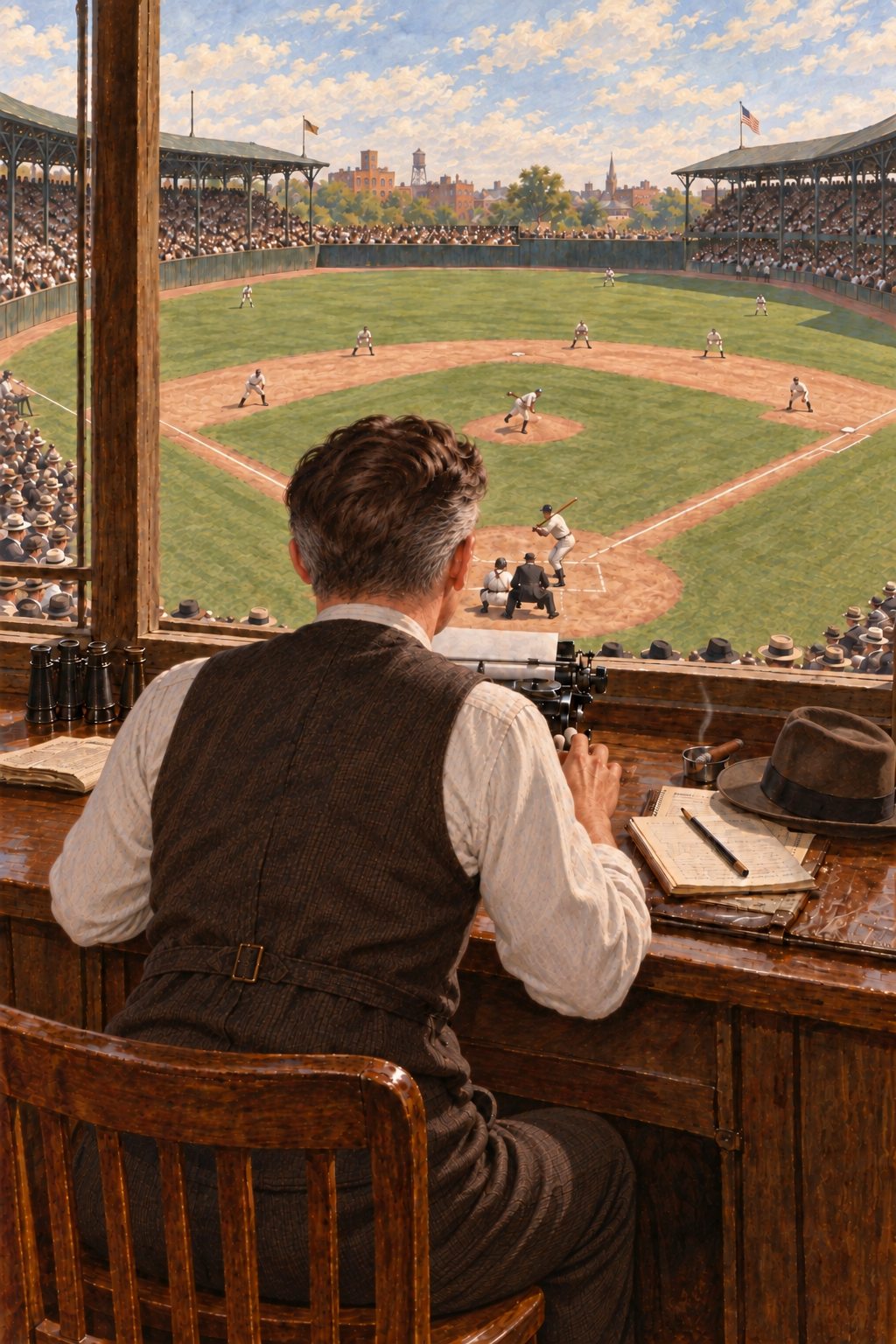
Two things are made. The advertisements, marked †, are composed for this paper, and the firms in them are invented. The cover of each issue is a composed illustration, drawn or painted in the manner of the period. It shows no real person and nothing that happened after the issue closed.
Who writes it
Sporting Chronicles is published by Jeremy Heckerling. It is written by AI, to rules the publisher set. Every fact is traced to a source before it is printed. Each issue is then checked three times: once by the system that wrote it; once by a separate reader, given nothing but the text, who says whether it is worth reading; and once by a fact-checker from a different AI company, looking for anything the date could not have known.
Whose voice it is
The paper is written in the voice of the mainstream sporting press of 1919, and that press was white. It covered the major leagues, the colleges and the white prizefighters closely. It covered Black athletes rarely and badly, and often in terms this paper will not repeat.
In 1919 Black sport was covered respectably only by Black writers, in the Black press. So here the paper takes a liberty no mainstream weekly of the time would have taken. Whenever Black sport makes news, whether a ball club, a fighter, a college eleven or a man on a professional team, it is reported in the voice of those writers. Just as the AI that writes this paper tries to catch the distinctive style and vernacular of the white sportswriters of the day, in these items it tries to catch the distinctly different style and vernacular of the Black writers who covered their own athletes. Nothing in the paper marks the change; this page is the explanation.
The facts in those items follow the same rules as everything else: public by the close, sourced, and with disagreements printed. Only the voice changes. It is a license the publisher is happy to take. The alternative was to reproduce the silence of the white press of 1919.